← All editions
CoR Intel Weekly 13 October 2026

Hawkins Transport fined $60,000 over eight SIO breaches — CoR Intel, 13 Oct

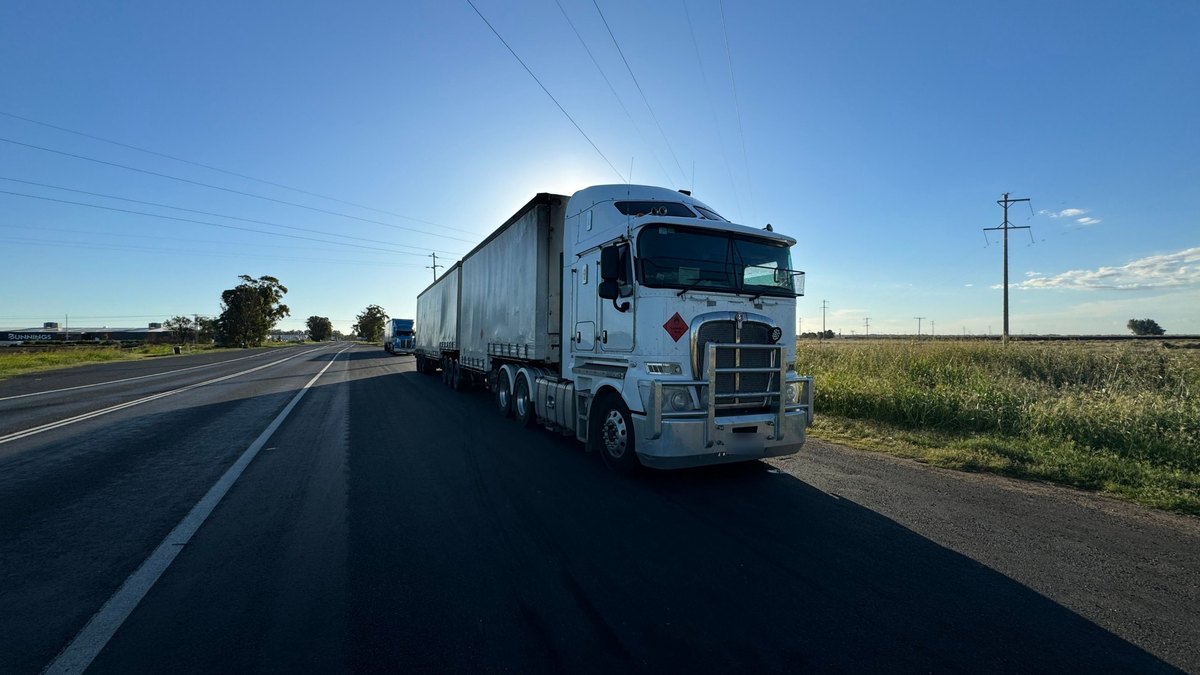
A white Kenworth K200 B-double parked on the shoulder of a flat country highway, low sun behind the cab

Truck & Bus News · Enforcement Action · 13 October 2026

Hawkins Transport fined $60,000 over eight supervisory intervention order breaches

Hawkins Transport, a Queensland operator, was fined $60,000 in the Townsville Magistrates Court after pleading guilty to eight offences of breaching a court-ordered Supervisory Intervention Order. It failed to present heavy vehicles for required safety inspections on seven occasions, 38 vehicles in total, and failed to provide copies of defect notices issued during the order. The 12-month order was imposed in November 2024, after a $55,000 conviction for failing to ensure its fleet was adequately maintained, serviced and repaired; that investigation followed a 2022 crash in Charters Towers involving a potentially dangerous braking system. The NHVR grounded the operator under a prohibition notice this year, and as of 7 October 2026, 92 of 108 first inspections had failed, an 85.2 per cent failure rate.

Why it mattersThe order existed because the court judged the operator a systemic or persistent offender. The breaches went to its two core controls: presenting vehicles for inspection and handing over defect notices. The escalation ran from maintenance conviction to supervisory order, prohibition notice and fresh prosecution. Any party contracting a carrier holds its own duty to see the maintenance and defect record, not assume it.

What to do

The compliance function should review every contracted carrier against the primary safety duty under the HVNL and its own SMS. Request each carrier's current defect notices, evidence that defects were rectified, and its maintenance schedule before the next dispatch. Escalate any carrier that cannot produce them.

A dated carrier-review register entry naming who checked each carrier's defect notices and maintenance schedule, and the method used, whether document request or site inspection.

Briefs

Fully Loaded Magazine · Safety Alert · 5 October 2026

SITRAK recalls 33 G7S 6X4 trucks over cruise control and AEB software

SITRAK has issued a recall notice for 33 units of all variants of the 2026 G7S 6X4 SINOTRUK. A software issue can cause Predictive Cruise Control to activate and brake the vehicle unexpectedly, and the Advanced Emergency Braking system may not operate as intended. SITRAK will contact owners to book inspection and repair work, free of charge.

Why it mattersUnexpected braking in traffic, and an AEB that may not work, are hazards the maintenance system has to catch. A recall left unactioned is a known defect kept in service.

What to do

Fleet maintenance should check the fleet register for any 2026 G7S 6X4 units. For each unit, confirm SITRAK has made contact, book the recall work, and track it against the SMS maintenance schedule until the software fix is completed.

A dated recall register entry per unit recording the VIN checked, who checked it, the booking date and SITRAK's completion confirmation.

Prime Mover Magazine · Regulatory Update · 9 September 2026

Victoria consults on heavy vehicle licensing reform aligned with national competency framework

The Victorian Department of Transport and Planning issued a Regulatory Impact Statement on changes to heavy vehicle driver licensing, aligned with the National Heavy Vehicle Driver Competency Framework reforms agreed in-principle nationally. It assesses three implementation options, ranging from closely matching the national model to adding Victorian requirements. Reforms include mandatory minimum training times, strengthened eligibility criteria and alternative progression pathways. Submissions closed on 9 October.

Why it mattersThe CTAA calls the current regime an antiquated "time served" model. If competency replaces tenure, a licence class will say something different about a driver, and operators still own the task of matching drivers to combinations.

What to do

The operations function should review how drivers are assessed before being assigned HC or MC combinations under the SMS. Check that induction records show competency on the specific combination, rather than relying on licence class alone.

A dated driver-competency register entry naming the assessor, the combination assessed and the method, whether a supervised drive or a documented assessment.

Big Rigs Magazine · Regulatory Guidance · 9 October 2026

Prohibition notices reserved for imminent risk after lower-level interventions fail, Alsbury writes

Writing in Big Rigs, NHVR Executive Director Statutory Compliance Paul Alsbury said fewer than 0.01 per cent of Australia's 294,000 heavy vehicle operators will be subject to a prohibition notice. Notices are issued only for an imminent or immediate risk of death or serious harm. They follow lower-level interventions such as improvement notices and requirements to present vehicles for inspection. NHVR education activity grew by approximately 30 per cent over the past year.

Why it mattersRead with the Hawkins case, this sets out the escalation path: compliance history, engagement, lower-level notices, then grounding. A carrier's defect, crash and fatigue record is the evidence the regulator weighs.

What to do

Executives should ask the compliance function for a report on every improvement notice, defect notice and inspection requirement received under the HVNL in the past year. The report should show the corrective action and close-out for each notice, and be tabled at the next board meeting.

A signed-off, dated board paper listing each notice, the corrective action taken, who verified close-out and how it was verified.

In brief

Dates to watch

On the record

Hawkins Transport's vehicles failed first inspection at a rate of 85.2 per cent. At the gate, a site sees the truck but not the history behind it. The Safe Freight Program gives a site or carrier a dated, on-the-record check of a driver or vehicle at the gate, in seconds. Each result shows what was checked, when, and by what method. One record travels with the driver across carriers and sites. It informs the decision at the gate and never makes it. To put standing on the record, see how it works See how it works →

This week: 40 items read across 9 sources; 12 made the cut.

Want CoR Intel Weekly each week?

Free, weekly, unsubscribe anytime.

Subscribe free